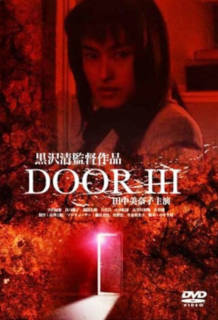
There is a Door (1988) and Door II: Tokyo Diary (1991), but I don't believe they share any plot points or characters. (The first's about a housewife who slams the door on a salesman's hand, then the second's about a prostitute.) I've no idea how this became a series, or indeed why this one called itself a Door film at all. The plot doesn't involve doors. You won't notice any.
It's directed by Kiyoshi Kurosawa (
Cure,
Charisma,
Creepy,
Pulse, etc.) It's thus better than I'd expected from a film called Door III, especially given its trashy-looking poster. Theoretically, this could have been a sleazy film, given its subject matter and occasional nudity, but Kurosawa films it in his usual dead-eyed style and stops it from being erotic. It's interesting, though. I see similarities with
Cure and
Creepy, although unfortunately this film explains away its antagonist's mind-warping superpower. It would have been stronger with more ambiguity. Fujiwara Mitsuru mesmerises women like a hypnotist, which he uses for sexual advantage and possibly to create zombies. He's arrogant and creepy. In one scene, he forcibly undresses a woman he's never met who'd only just walked into his office. What's more, that victim flees topless into a room full of office ladies... who pay no attention as Fujiwara chases after her and drags her back. (His company's staff are all female and might have lost the power of speech.)
That's certainly memorable. Fujiwara's the strongest thing about this film. However, explaining away his powers makes them less scary and gives the film a slightly silly-looking B-movie finale. There's a dark twist at the end, but you'd have been more surprised if there hadn't been.
I liked the spooky sinister Kurosawa-ish stuff, but I wasn't keen on the protagonist. Minako Tanaka plays an ambitious insurance saleswoman. She wants a promotion, but she's not hitting her sales targets. There's a ranking order. Last = men. Just about managing = Tanaka. Winners = female colleagues who offer sexual favours to customers. Anyway, Tanaka's charmless. If they'd made a sequel, she'd have been scary as hell. In fairness, though, she fits this hard, merciless film where what you should be most frightened of is other women. Kurosawa's camera underlines this, e.g. conversations in long shot that don't show the actresses' faces and instead emphasise their physical distance.
I also didn't care about what we saw of her job. In order to sell insurance, she pressurises clients and tries inadvisable gambits.
Kurosawa only directed this time. He didn't write it. That explains a few things, although this feels like an influential film in his oeuvre. (He made
Cure the following year.) He does, though, undercut the script's rationalist explanations, e.g. that scene where one of Minako's female colleagues is speaking with Fujiwara's voice and advancing with her arms raised like a puppet. What the hell was that? I've no idea. You could probably square it with the script's explanations, but it felt supernatural at the time.
I didn't really like or enjoy this film, but it made me think. If you're into Kiyoshi Kurosawa, I'd suggest taking a look.